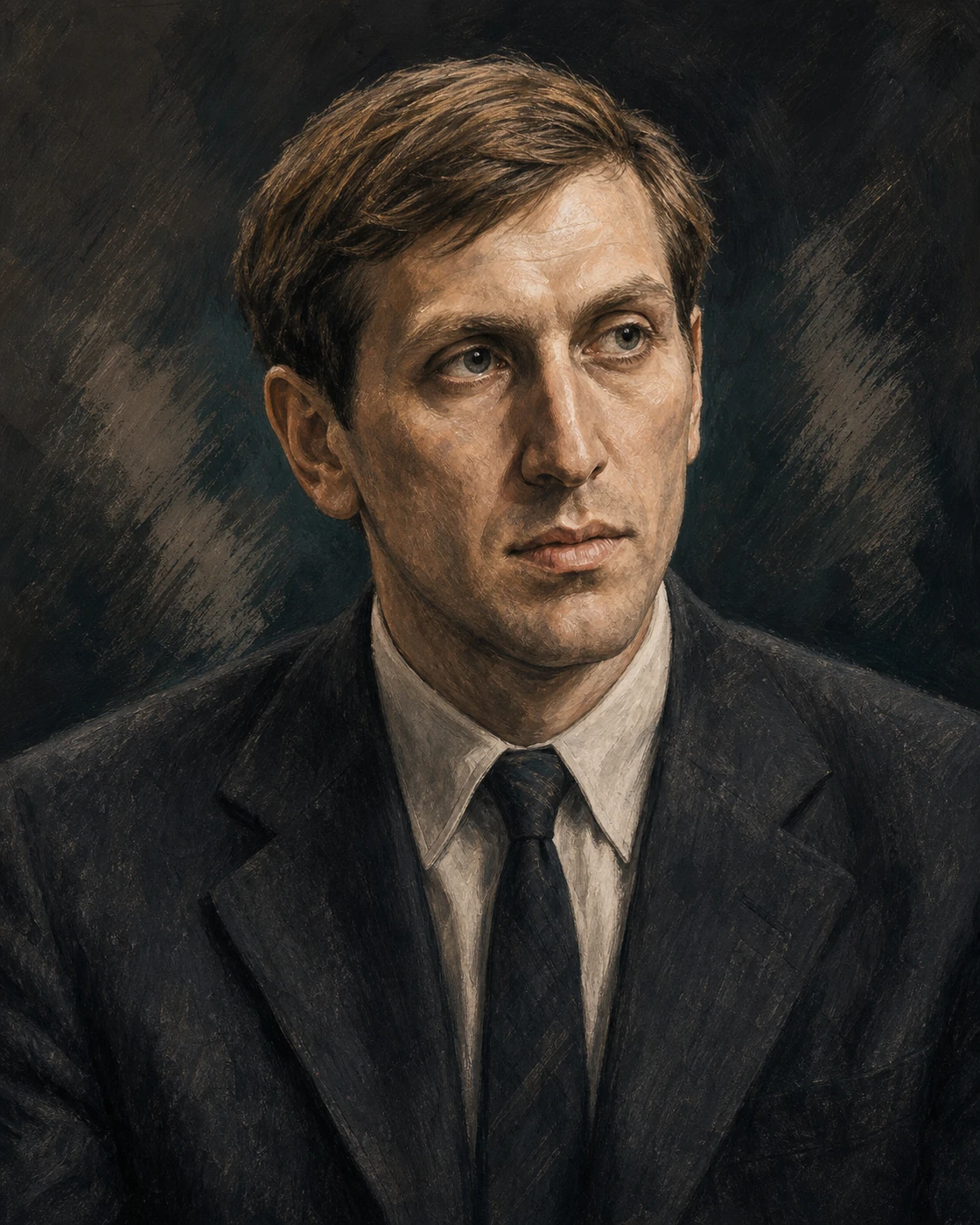
Bobby Fischer
Activity
Precision without compromise
The key lesson
Look for active squares for your pieces and do not make a move just because it looks natural. Every move should serve a concrete goal.
The bot is a fictional character inspired by the idea of the play, not a digital copy of the master.
Play the idea
Find the master's move
Place the rook actively. Which move lets it use the open file?
Select a pawn or piece, then the destination square.
Short answer
Who was Bobby Fischer?
Bobby Fischer was an American world champion who in 1972 beat Boris Spassky in Reykjavík. His road to the title included unprecedentedly high wins in the Candidates matches. Fischer combined deep opening preparation with a clear plan, piece activity and remarkable accuracy in converting an advantage.
How did Bobby Fischer play?
Fischer's games are good training material because even complicated decisions often have a readable aim. Pieces land on active squares, rooks take open files, and the opponent's weakness is attacked with as many pieces as needed. Fischer could attack, but just as important were his endgame technique and his readiness to simplify the position if it led to a favorable, calculable result. Activity did not mean chaos, only making the most of every tempo.
What can you learn from the games of Bobby Fischer?
- Give every move a concrete purpose: development, pressure on a weakness, improving the king or preparing an exchange.
- When a file opens, check whether your rook can enter it immediately, before your opponent does.
- Before simplifying, calculate the final position, not just the first exchange. A favorable series can have several stages.
Why is Bobby Fischer important in chess history?
Fischer ended the long dominance of the Soviet chess school and made the world championship match a global event. He left games valued for their logical construction and ideas about how competitions are organized. His career was short compared with other masters, but his influence on the popularity of the game and the standard of professional preparation remains enormous.
Next
Rivals and contemporaries
Next master
Sources and scope
Biographical facts were checked against: World Chess Hall of Fame. The description of the style, the training tips and the exercise are Szachmaty's own educational work. They are not a copy of a book or a record of the master's statements. See also how we make the project.
The portrait is a labeled illustration and does not suggest cooperation with or authorization by this person. Last updated: .