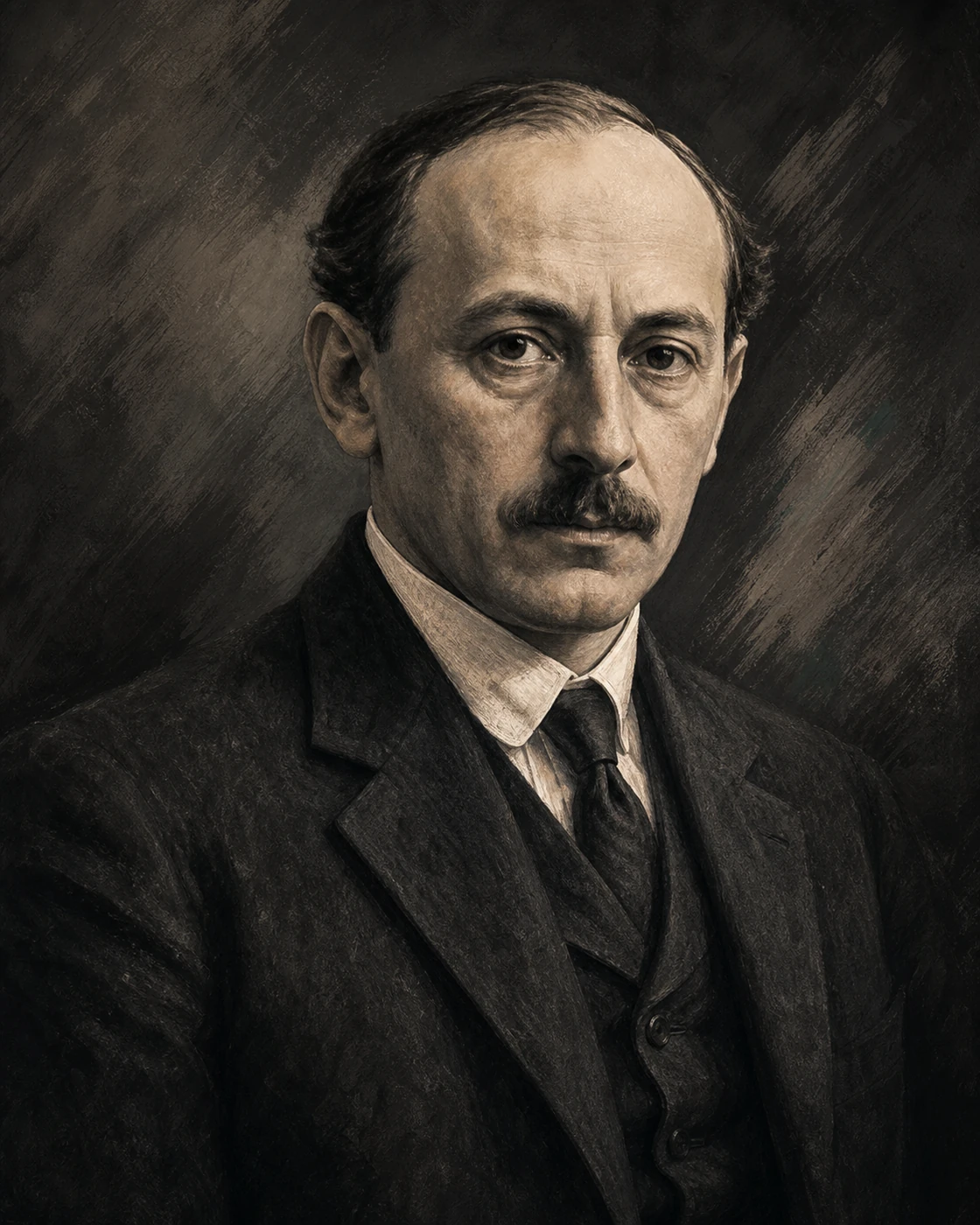
Akiba Rubinstein
Coordination
Harmony of all the pieces
The key lesson
Before you start an action, check that all your pieces are cooperating. One badly placed piece can stop the whole plan.
The bot is a fictional character inspired by the idea of the play, not a digital copy of the master.
Play the idea
Find the master's move
Improve the coordination of your pieces: find a strong outpost for the knight.
Select a pawn or piece, then the destination square.
Short answer
Who was Akiba Rubinstein?
Akiba Rubinstein was a Polish grandmaster of the early 20th century, famous for harmony of the pieces, positional play and rook endgame technique. In 1912 he won a series of the most important tournaments and was among the leading candidates for a world championship match. His games show how a small advantage in piece placement can gradually turn into a won endgame.
How did Akiba Rubinstein play?
Rubinstein placed his pieces so that they supported one another and carried out the same plan. His ability to move from the opening to the middlegame without losing the tempo is especially valuable, as is his choice of exchanges that improve the structure or the activity of a rook. In his best games there are no random pieces standing on the side. Before a combination appears, the position is already prepared: the files are open, the entry squares controlled and the opponent's defense overloaded.
What can you learn from the games of Akiba Rubinstein?
- Check whether your pieces attack a common target. Two coordinated pieces are usually stronger than three working separately.
- Do not trade automatically. Judge which side's pawn structure or rook activity will improve after the exchange.
- In a rook endgame, place your rook actively: behind a passed pawn or on a file that cuts off the king.
Why is Akiba Rubinstein important in chess history?
Rubinstein is one of the most important chess players associated with Poland and a constant reference point for learning rook endgames. Opening variations bear his name, but the greatest training value lies in the complete games: from the calm placement of the pieces to the precise use of an advantage. He shows that coordination is the source of both strategy and tactics.
Next
Rivals and contemporaries
Next master
Sources and scope
Biographical facts were checked against: Polish Chess Federation. The description of the style, the training tips and the exercise are Szachmaty's own educational work. They are not a copy of a book or a record of the master's statements. See also how we make the project.
The portrait is a labeled illustration and does not suggest cooperation with or authorization by this person. Last updated: .