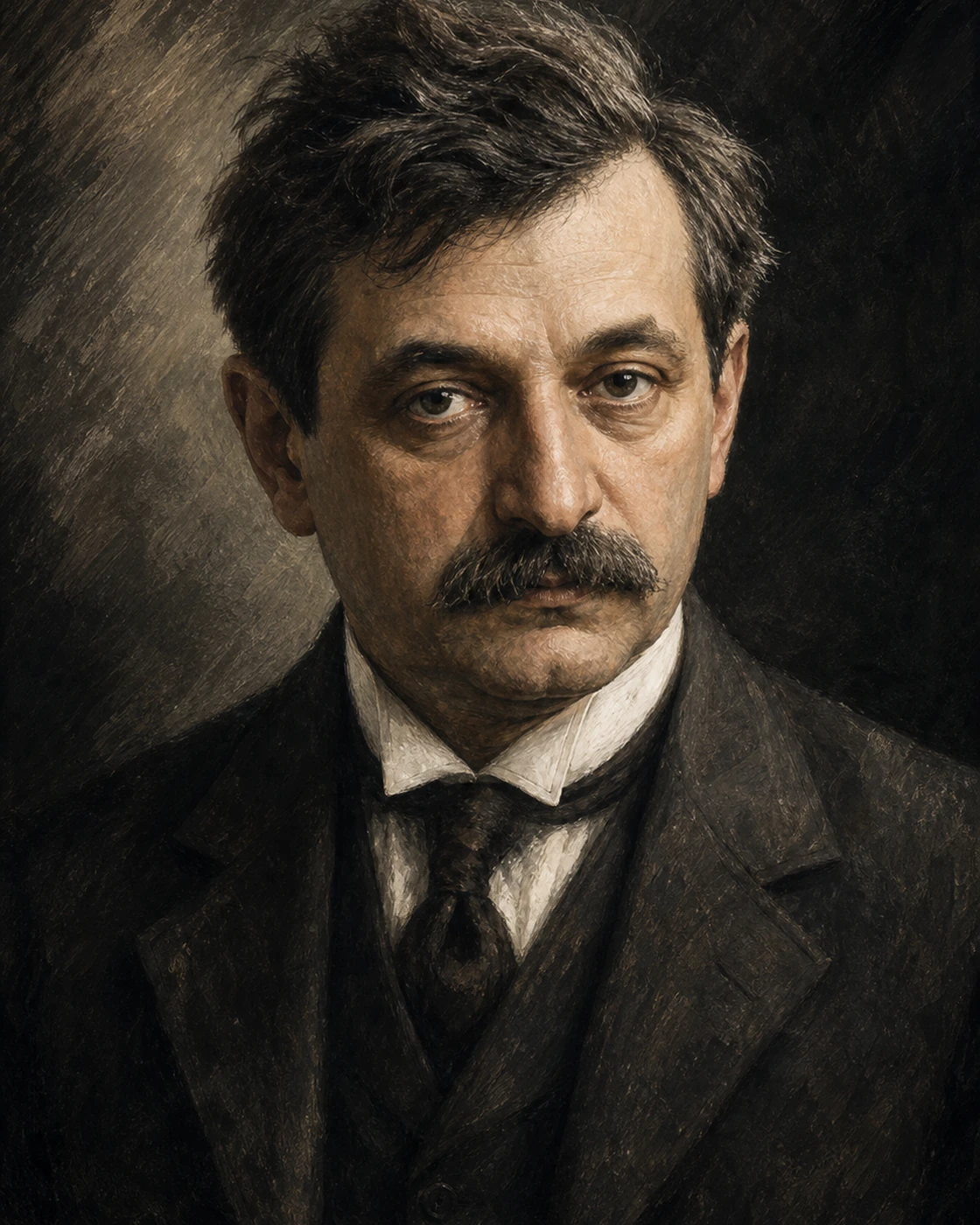
Emanuel Lasker
Adaptation
A pragmatist of the world stage
The key lesson
The best move is not always the most spectacular one. Choose a plan that is clear to you and hard for your rival.
The bot is a fictional character inspired by the idea of the play, not a digital copy of the master.
- Rivalry: Capablanca – Lasker1921 · The world championship match in Havana
- Rivalry: Lasker – Steinitz1894-1897 · 2 world championship matches
Play the idea
Find the master's move
Do not choose the most tempting check. Find a practical move that keeps the advantage.
Select a pawn or piece, then the destination square.
Short answer
Who was Emanuel Lasker?
Emanuel Lasker was world champion from 1894 to 1921, that is for 27 years, longer than anyone else. He combined chess strength with a pragmatic approach to the opponent and the tournament situation. He could choose positions uncomfortable for a particular rival, even if they were not the most schematic route to an advantage.
How did Emanuel Lasker play?
Lasker did not have one rigid repertoire of decisions. He adapted the character of his play to the score, the clock, the rival's strengths and his own practical chances. This does not mean playing objectively weak moves. It means choosing, among good options, the one that poses the opponent the hardest question. His games teach the difference between evaluating a position and the difficulty of playing it for a human. They also demand resilience: a position may look uncomfortable but still contain resources.
What can you learn from the games of Emanuel Lasker?
- Before a game, set your own tournament goal, but at the board make decisions according to the position, not the standings.
- If two moves have a similar evaluation, choose the one after which your plan is clearer to you and your rival's reply is harder.
- In defense, look for a resource that changes the character of the position: exchanges, a counterattack or a switch to a different kind of endgame.
Why is Emanuel Lasker important in chess history?
The record length of Lasker's reign is only part of his significance. He developed thinking about the psychology of the fight, the practical value of a position and adaptation. He was also a mathematician and philosopher, which strengthened his interest in the principles of decision making. For a modern player he remains a reminder that a game is a duel of problems, not a contest of memorized evaluations.
Next
Rivals and contemporaries
Next master
Sources and scope
Biographical facts were checked against: FIDE: world champions. The description of the style, the training tips and the exercise are Szachmaty's own educational work. They are not a copy of a book or a record of the master's statements. See also how we make the project.
The portrait is a labeled illustration and does not suggest cooperation with or authorization by this person. Last updated: .