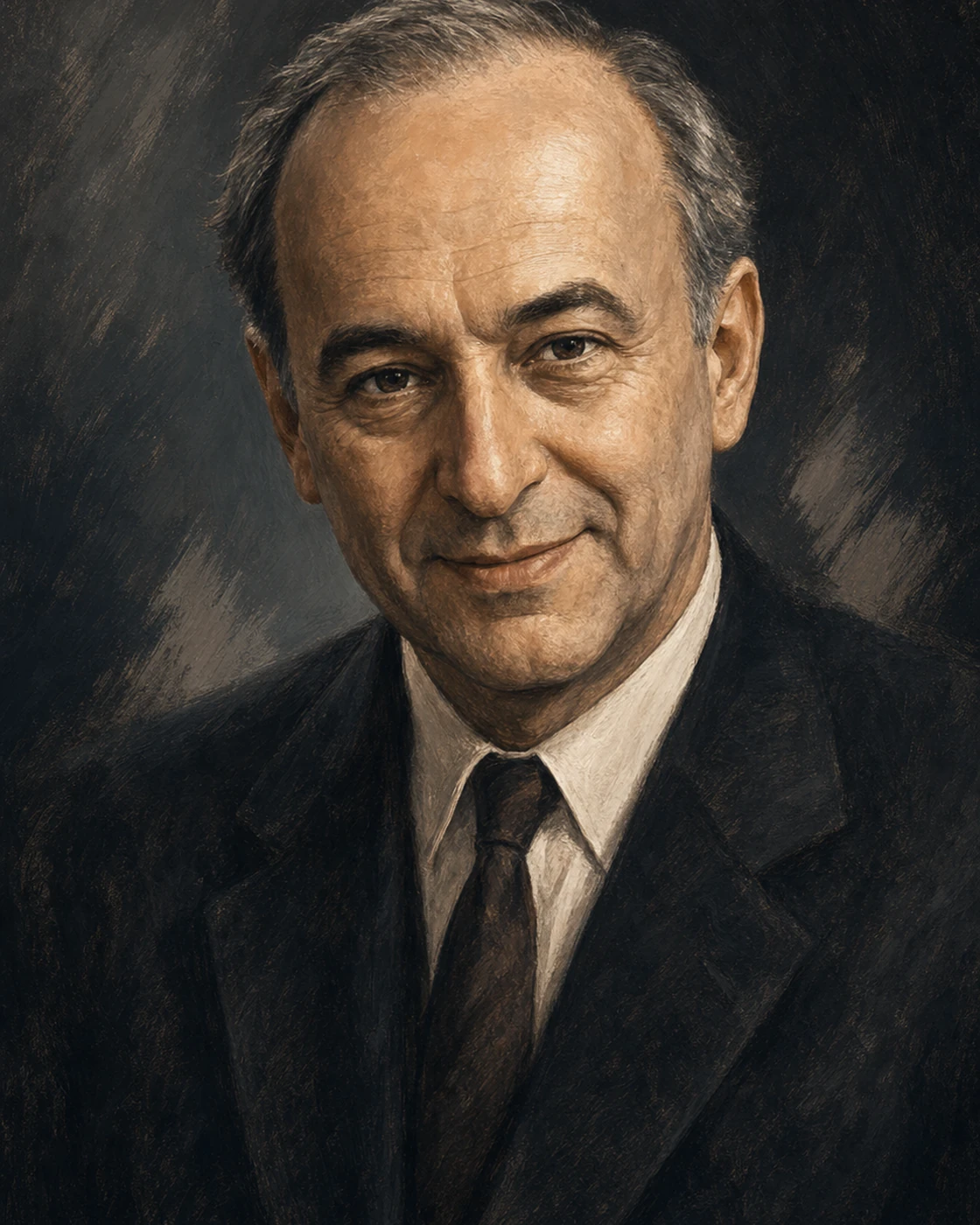
Mieczysław Najdorf
Active defense
Counterattack from the first moves
The key lesson
Defense does not mean passivity. Fight for the center and look for a counterattack before your opponent finishes his preparations.
The bot is a fictional character inspired by the idea of the play, not a digital copy of the master.
Play the idea
Find the master's move
Defend actively: the knight is under threat but it can step away with a tempo and win material.
Select a pawn or piece, then the destination square.
Short answer
Who was Mieczysław Najdorf?
Mieczysław Najdorf was a Polish-Argentine grandmaster, a leading player of the world after World War II and one of the greatest popularizers of chess in South America. A sharp variation of the Sicilian Defense bears his name. He played actively, had a good feel for counterattack and could create chances even in positions requiring accurate defense.
How did Mieczysław Najdorf play?
Najdorf gladly accepted imbalance: different pawn structures, play on opposite wings and positions in which both sides have their own tempo. Active defense did not mean ignoring a threat but replying in a way that both secured a weakness and created a problem for the opponent. In such positions the center and the order of moves are especially important. A counterattack on the wing will not work if the rival can open the center while your king is not ready.
What can you learn from the games of Mieczysław Najdorf?
- In defense, look for a move with a double purpose: remove the threat and attack a piece, a square or the opponent's center.
- In attacks on opposite wings, count the tempi. A single prophylactic move can be more important than another pawn advance.
- Do not copy an opening variation without a plan. Explain where the pieces belong and which breakthrough the structure prepares.
Why is Mieczysław Najdorf important in chess history?
Najdorf united two chess traditions and became a central figure of Argentine chess life. The Najdorf Variation remains one of the most important systems against 1.e4, because it gives Black active, flexible play. His energy, memory and simultaneous exhibitions built interest in chess far beyond elite tournaments.
Next
Rivals and contemporaries
Next master
Sources and scope
Biographical facts were checked against: OlimpBase. The description of the style, the training tips and the exercise are Szachmaty's own educational work. They are not a copy of a book or a record of the master's statements. See also how we make the project.
The portrait is a labeled illustration and does not suggest cooperation with or authorization by this person. Last updated: .