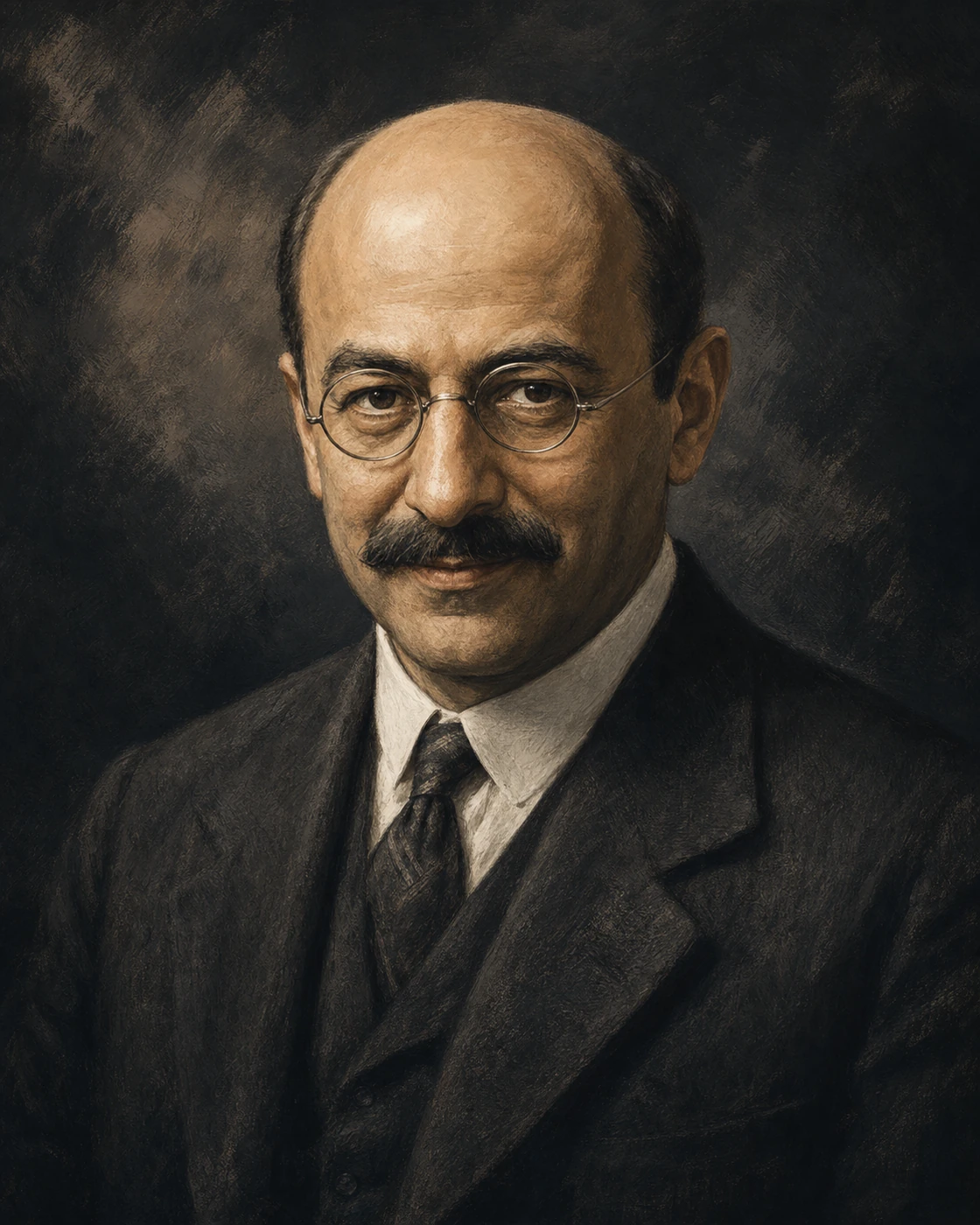
Ksawery Tartakower
Flexibility
Provocation with an idea
The key lesson
You do not have to occupy the center with pawns right away. You can control it with pieces and provoke your rival into creating targets.
The bot is a fictional character inspired by the idea of the play, not a digital copy of the master.
Play the idea
Find the master's move
Find a flexible knight incursion that covers the opponent's defense.
Select a pawn or piece, then the destination square.
Short answer
Who was Ksawery Tartakower?
Ksawery Tartakower was a Polish-French grandmaster, Olympiad player, theorist and one of the most recognizable commentators of his era. He represented Poland at Olympiads, winning, among other things, team gold in 1930. In play he valued flexibility, provocation and hypermodern control of the center with pieces.
How did Ksawery Tartakower play?
Tartakower could let his opponent take space if he later saw a concrete way to undermine it. He did not equate the center only with pawns standing on d4 and e4; what counted was control of squares, the possibility of a breakthrough and flexibility of setup. Such a style requires discipline. Provocation without a plan only creates a weakness. A correct provocation induces the rival to a move after which their structure becomes a target or their pieces lose good retreat squares.
What can you learn from the games of Ksawery Tartakower?
- Distinguish occupying the center from controlling the center. A piece pressing on a square can be as important as a pawn standing on it.
- If you provoke a pawn move, name the square that pawn stops controlling and the piece that will exploit it.
- Keep two plans available until your opponent reveals the structure. Flexibility ends the moment of an irreversible pawn move.
Why is Ksawery Tartakower important in chess history?
Tartakower influenced chess as a player, an author and the creator of a language used to describe practical play. His aphorisms are remembered, but behind the wit stood deep knowledge of the uncertainty of decisions. For Polish chess he remains an important Olympiad player, and for theory he remains one of the representatives of the shift from the classical occupation of the center to hypermodern control.
Next
Rivals and contemporaries
Next master
Sources and scope
Biographical facts were checked against: Polish Chess Federation. The description of the style, the training tips and the exercise are Szachmaty's own educational work. They are not a copy of a book or a record of the master's statements. See also how we make the project.
The portrait is a labeled illustration and does not suggest cooperation with or authorization by this person. Last updated: .