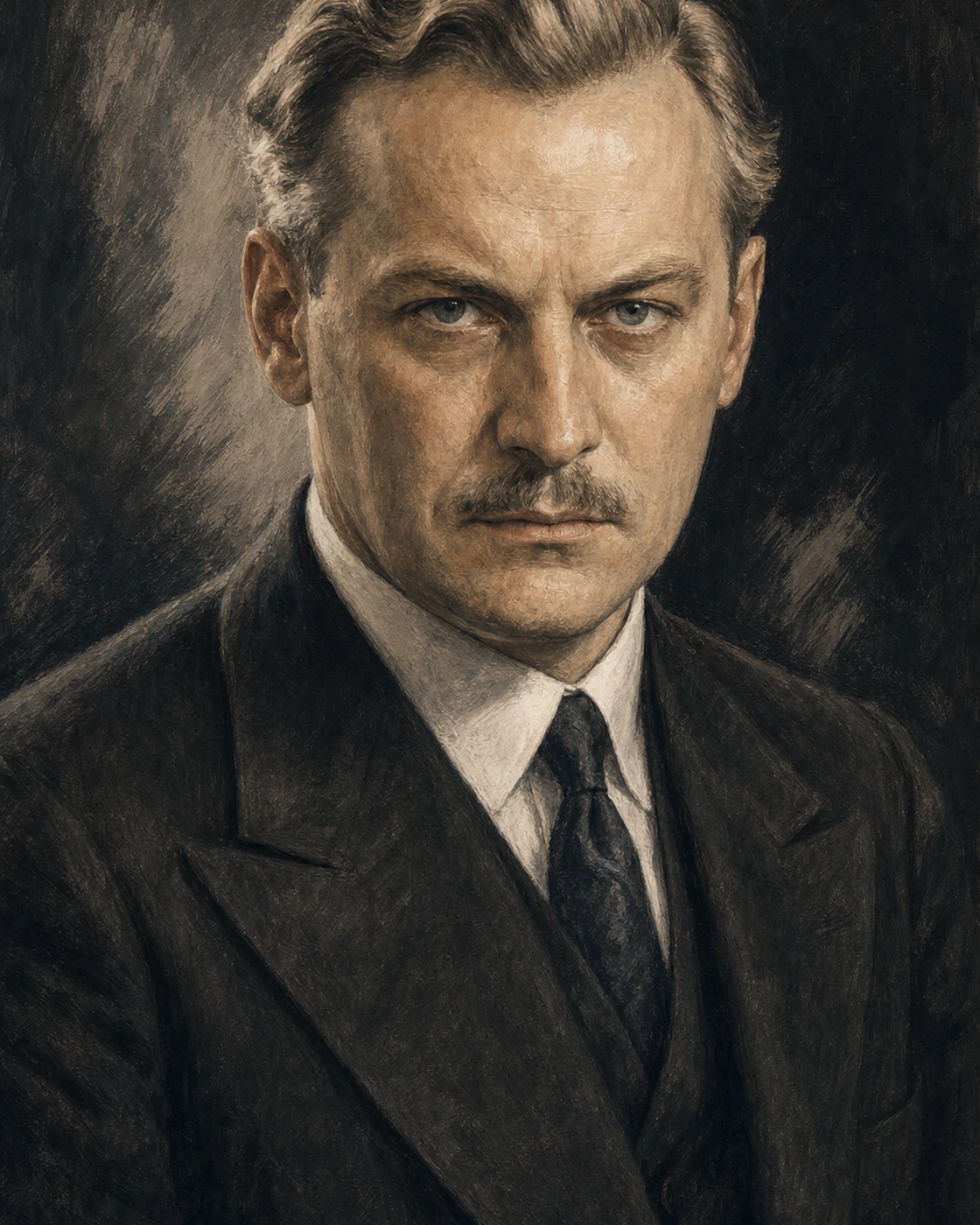
Alexander Alekhine
Initiative
Complications under control
The key lesson
When you have more active pieces, look for a way to raise the tempo of the game before your opponent can regroup.
The bot is a fictional character inspired by the idea of the play, not a digital copy of the master.
Play the idea
Find the master's move
Raise the tension with a single move. Uncover a rook attack and attack the queen at the same time.
Select a pawn or piece, then the destination square.
Short answer
Who was Alexander Alekhine?
Alexander Alekhine was world champion from 1927 to 1935 and again from 1937 until his death in 1946. He beat Capablanca in a long match and became famous for elaborate combinations, attack and the ability to create complications on his own terms. His best games show how a strategic plan prepares a tactical finale.
How did Alexander Alekhine play?
Alekhine built his attack in stages. He gained space, placed his pieces on lines leading to the king and only then changed the structure or sacrificed material. Several threats at once are characteristic: the opponent can defend one but loses control of another square. For a student this is a lesson in branching calculation. You have to compare the rival's replies, return to the final position and check whether the advantage remains even after the most resilient defense.
What can you learn from the games of Alexander Alekhine?
- Build a variation along one branch and write down the final position in your mind before moving on to the next reply.
- Look for a move that creates two different threats. One threat is often easy to defend, two can overload a piece.
- Do not start a combination without an activity advantage. First improve the piece that does not take part in the plan.
Why is Alexander Alekhine important in chess history?
Alekhine showed that a deep combination does not have to be a random flash. It can result from the consistent accumulation of dynamic advantages. His annotations and game collections influenced the way people analyze their own play, though they call for critical reading. He remains a model of combining plan, imagination and concrete calculation.
Next
Rivals and contemporaries
Next master
Sources and scope
Biographical facts were checked against: FIDE: world champions. The description of the style, the training tips and the exercise are Szachmaty's own educational work. They are not a copy of a book or a record of the master's statements. See also how we make the project.
The portrait is a labeled illustration and does not suggest cooperation with or authorization by this person. Last updated: .